Can AI build your workout plan? What it gets right, and what's still up to you
AI can write a workout plan in seconds. What it does better than a template, where it falls short, and how to get a plan you'll actually follow.
· 7 min read
Ask a chatbot for a workout plan and you’ll have one in ten seconds: three days a week, a neat table of exercises, sets and reps. It looks a lot like what a coach would hand you.
Getting a plan was never the hard part, though. The internet has been full of free programs for twenty years. The hard part is getting one that fits you (your level, your equipment, the 35 minutes you have on a Tuesday) and still following it in week five.
That’s where AI is genuinely useful, and also where it’s easy to be misled. Here’s what it does well, what it can’t do, and how to use it so the plan survives contact with your actual week.
What AI does better than a template
It handles all your constraints at once
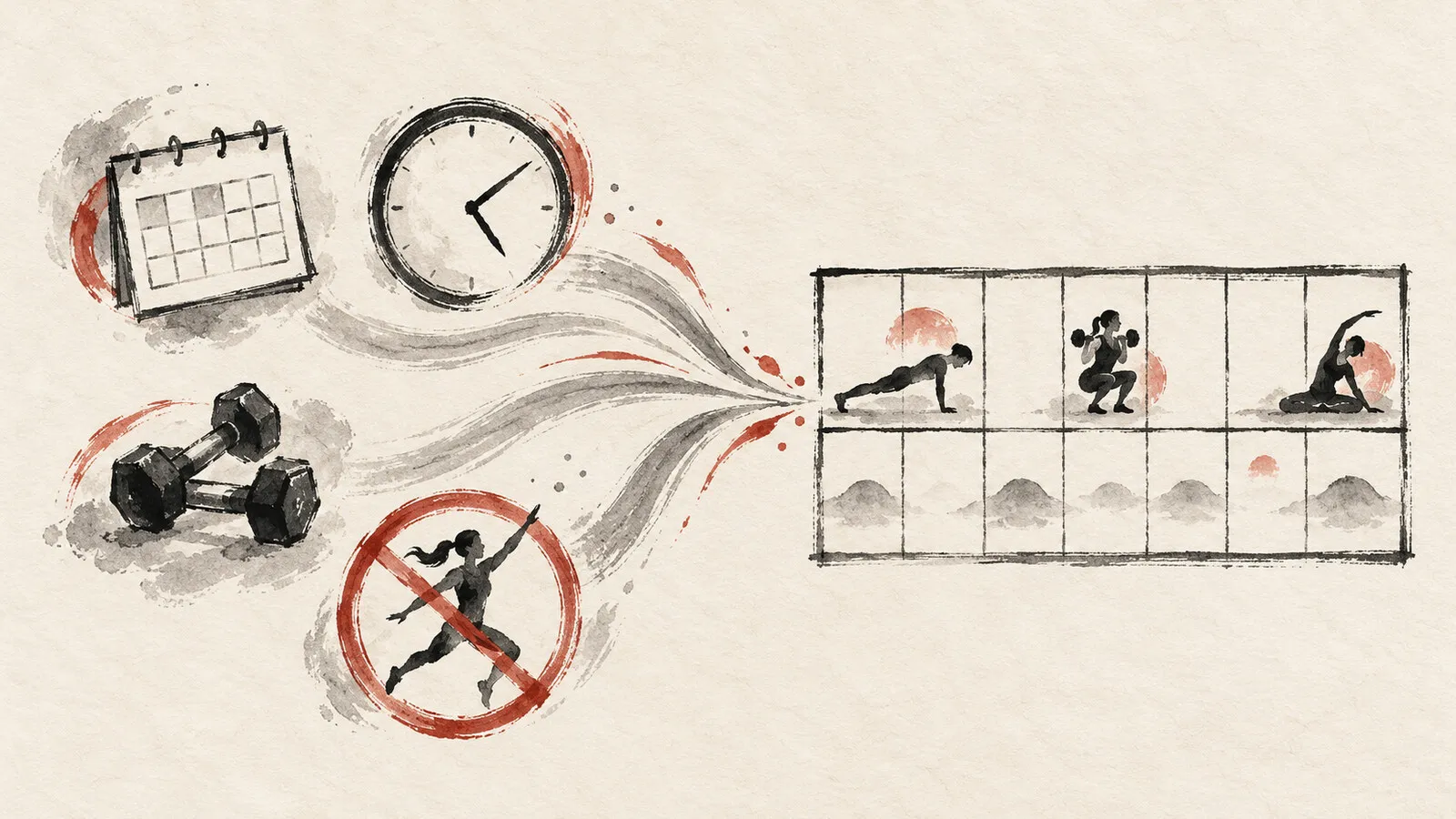
A template is written for an imaginary person with a full gym and an hour, four times a week. Real life is messier: three sessions of 30 minutes, a pair of dumbbells and a pull-up bar, no jumping because of the neighbours downstairs, and I’d like to work on my back.
A good coach juggles that in their head. A template can’t. An AI model can, instantly: pick exercises that only need what you own, fit them into the time you have, and spread the muscle groups over the week so you don’t train the same thing two days in a row.
You can change it just by asking
The best part isn’t the first draft, it’s the second, third and fourth. With a template, if Thursday’s session is too long, you’re on your own. With AI you can say make Thursday 20 minutes, replace the burpees or more core, less legs, and the whole plan is adjusted, not just one line.
It’s there at 11 p.m.
A good personal trainer is worth the money, but most people can’t afford one every week. AI doesn’t replace them (more on that below), but it makes the planning part, which used to take a coach or a lot of reading, available to everyone.
Where AI falls short
It only knows what you tell it
“I’m intermediate” means very different things to different people. A model has no way to check, so it plans for the person you describe, and most of us are bad at describing our own level. Overestimate it and the first week is so hard you quit. Underestimate it and nothing happens for a month.
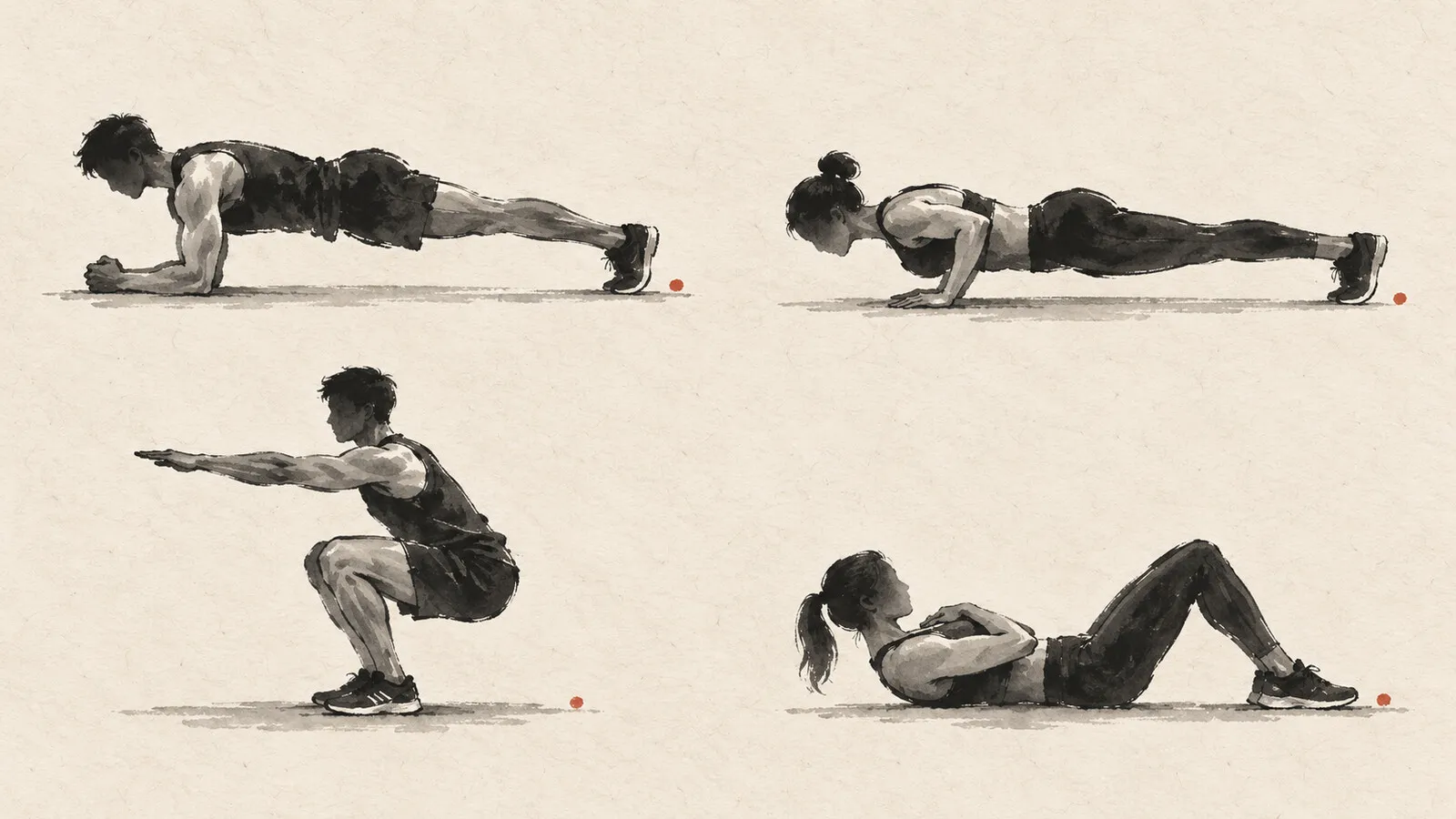
The fix is boring and effective: measure before you plan. A few max-effort tests, like how long you can hold a plank and how many push-ups and squats you can do, tell you more than any self-assessment.
A general chatbot can make things up
Ask a general-purpose chatbot for a program and it may suggest an exercise that needs equipment you don’t have, a variation that doesn’t really exist, or a volume that suits an athlete and crushes a beginner. It writes with the same confidence either way.
That’s no reason to avoid AI. It’s a reason to prefer tools where the AI works from a fixed library of real exercises and clear training rules, rather than from whatever it happens to remember.
It can’t see your form
No chat window can tell that your lower back rounds on the last rep. If you’re learning a new movement, a few sessions with a qualified coach, or at least filming yourself and comparing with a demonstration, is worth more than any plan. And if something hurts (not “this is hard”, but actual pain), that’s a question for a doctor or a physiotherapist, not for an AI.
It won’t get you off the sofa
This is the big one. A perfect plan you follow for two weeks loses to a decent plan you follow for six months. AI is great at writing plans. It does nothing about the Tuesday evening when you’re tired and it’s raining.
What helps is old-fashioned: sessions in your calendar on the days you can really train, a reminder at the right time, and a plan that doesn’t fall apart when you miss a session.
A plan is only a draft. Practice is what makes it work.
How to get a plan you’ll actually follow
Whatever tool you use, these steps make the difference.
- Start from a measured level, not a guess. Test first, then plan.
- Give real constraints: the days you can train, how many minutes, the equipment you own, and anything to avoid (a sore knee, no jumping, no floor work).
- Check that it progresses. Week four should be a little harder than week one: more reps, longer holds or more weight. On longer programs, a lighter week every month or so helps you recover.
- Keep the volume sustainable. You need less than you think. The World Health Organization recommends that adults do muscle-strengthening activities on at least two days a week. Two or three well-built sessions beat six you can’t keep up.
- Edit it. Swap the exercise you hate for one you’ll actually do. Shorten the session that won’t fit. The AI’s plan is a starting point, not a contract.
- Plan for missed sessions. You’ll miss some. Decide now what happens then: move the rest of the plan back, rather than skipping ahead or doubling up.
How we use AI in Yeonseup
We built AI program creation in Yeonseup around those limits, not around a chat window.
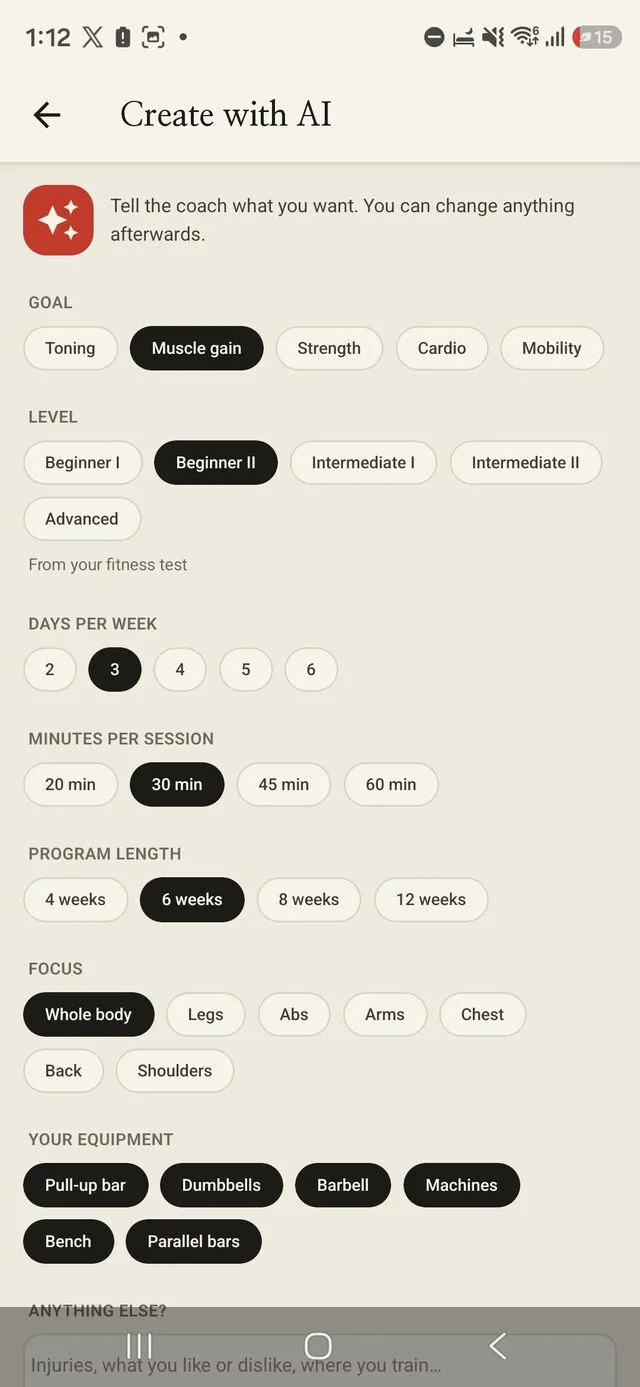
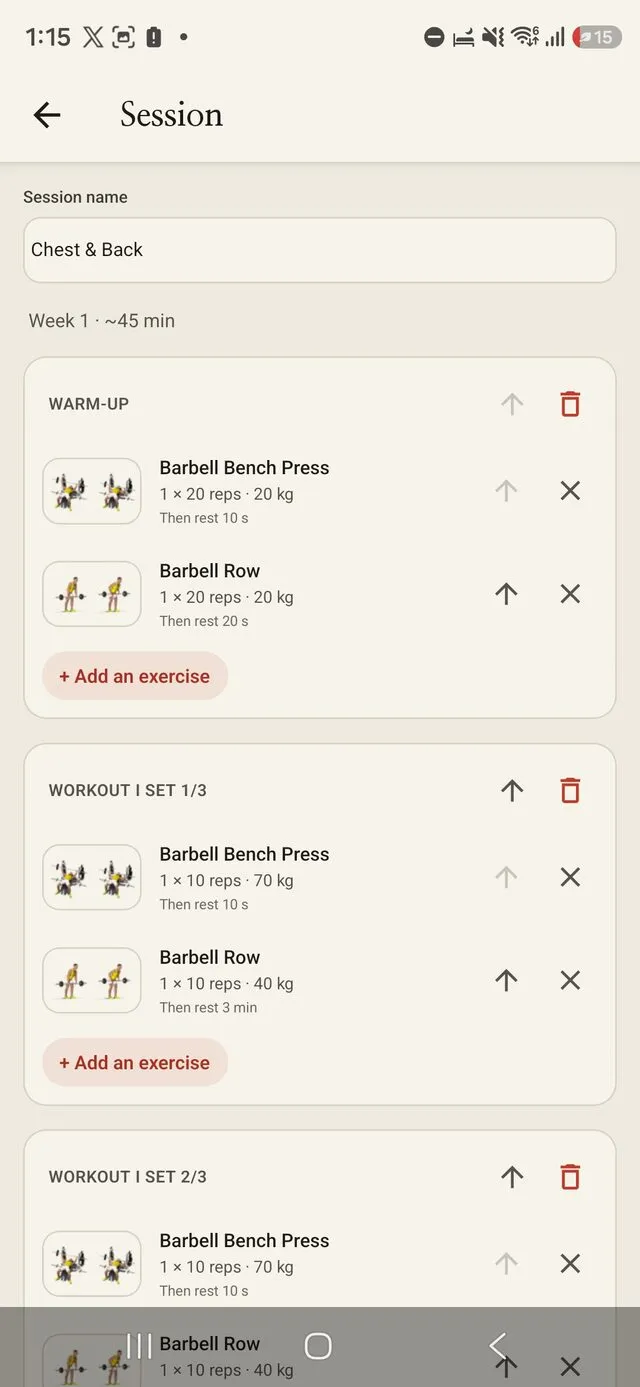
AI program creation and the session plan in Yeonseup.
- It starts from a test. The fitness test (plank, push-ups, squats and crunches at full effort) gives you an overall level from 1 to 5 and a level for each muscle group, so the AI plans for the level you measured.
- It only uses real exercises. The AI picks from Yeonseup’s library of more than 200 exercises, each with the muscles it works and the equipment it needs, and only from the equipment you have. It can’t invent one.
- It follows training rules. Sessions are sized to the time you chose, start with a warm-up and balance the muscle groups over the week. Programs get a little harder each week, with a lighter week every fourth week on longer programs. If you mention pain or an injury, it leaves out exercises that load that area.
- You shape it in conversation, then in the editor. Ask for shorter sessions or a different exercise and the AI updates the program. Then adjust any exercise, set or rest time yourself before saving it.
- Then it’s about showing up. The program goes into your calendar on the days you picked, with a reminder. Miss a session and you can reschedule the rest of the program in one tap. During the workout, the guided session tells you exactly what to do, set by set.
AI program creation is part of Premium. The fitness test, the free programs, the calendar and guided sessions are free.
Frequently asked questions
Can AI replace a personal trainer?
For planning, mostly: it can build and adjust a program that fits your level, your time and your equipment. For correcting your technique, motivating you in the room or working around an injury, no. Many people get the best of both: an AI-built plan, plus a few sessions with a coach to learn the movements.
Is an AI workout plan safe for beginners?
It can be, if it starts from your real level, uses exercises you can do with what you have, and progresses gradually. Start easier than you think you need, and stop any exercise that causes pain.
How often should a beginner train?
Two or three sessions a week is a good start, with a day of rest between sessions that work the same muscles. Training regularly matters more than training hard.
Yeonseup (연습) is the Korean word for practice. A plan, however clever, is only where you start. What makes you progress is doing the next session.